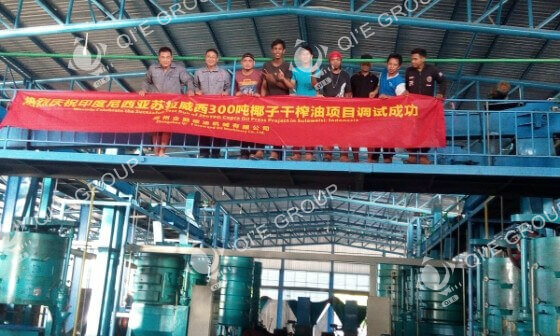
Olive Pomace Oil Solvent Extraction Line
Olive pomace oil is made from the leftover olive pulp (pomace) after extra virgin and virgin olive oils are extracted, using heat and chemical solvents to extract the remaining oil, which is then refined and often blended with virgin olive oil.
The primary method for commercial olive pomace oil extraction involves solvent extraction because mechanical methods alone cannot recover all the remaining oil, which is typically around 3-5%.
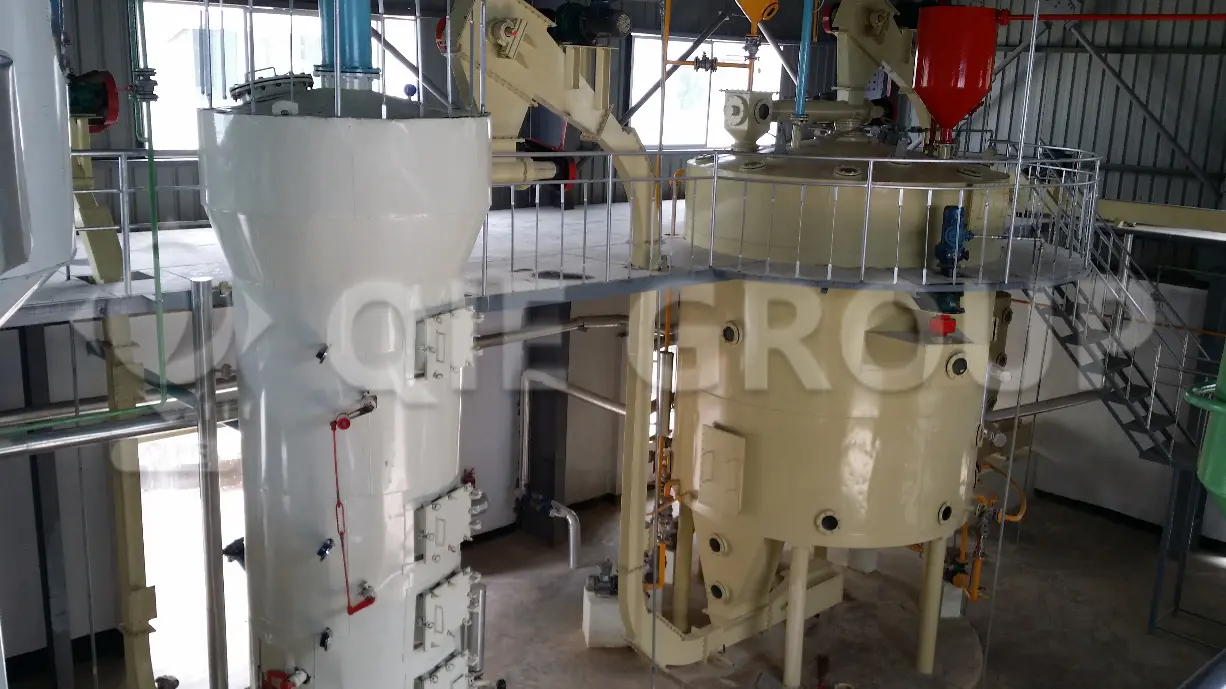
Pre-Treatment
This stage ensures pomace meets the optimal condition for solvent penetration, directly affecting extraction efficiency.
Receiving & Storage: Olive pomace is unloaded into sealed, ventilated silos (equipped with temperature and humidity sensors for tropical regions like Nigeria/Ghana) to prevent mold and moisture variation.
Drying & Conditioning: Pomace with initial moisture (60%–70%) is dried in a rotary dryer to a moisture content of 10%–15%. Excess moisture dilutes the solvent and reduces oil solubility; insufficient moisture causes pomace agglomeration.
Crushing & Screening: Dried pomace is crushed to 2–5 mm particle size and screened to ensure uniformity, increasing the contact area between pomace and solvent.
Magnetic Separation: Removes metal impurities to protect downstream extractors and pumps from wear and damage.
Solvent Extraction (Core Stage)
Common Extractor Types
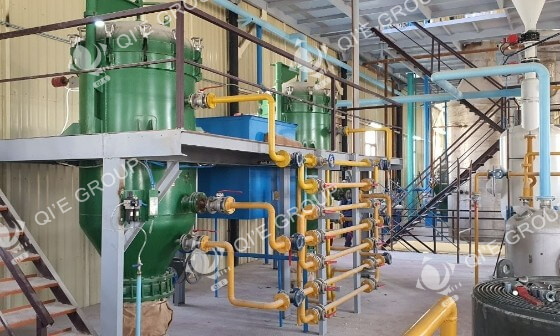
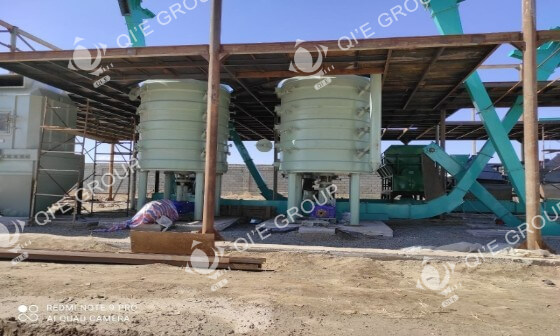
Rotary Extractor: Suitable for medium-scale plants (20–50 tons/day); pomace is loaded into rotating baskets and percolated with solvent countercurrently.
Loop Extractor: Ideal for large-scale plants (50+ tons/day); features a closed-loop conveyor system with high extraction efficiency and low solvent consumption.
Extraction Principle
Solvent (n-hexane) percolates through the pomace bed, dissolving residual oil to form a miscella (oil-solvent mixture, oil concentration 15%–25%). The de-oiled pomace (wet meal, solvent content 20%–30%) is discharged to the desolventizing stage.
Olive Pomace Oil Solven Plant Process
Pre - treatment of Olive Pomace: The olive pomace is first pre - treated, which may include processes such as crushing and drying to increase the contact area between the solvent and the pomace and improve the extraction efficiency.
Solvent Extraction: The pre - treated olive pomace is put into the extractor and soaked or percolated with a selected organic solvent that can dissolve oil to extract the oil and form a miscella.
Separation of Miscella: The obtained miscella is filtered to remove solid impurities, and then sent to the evaporator. In the evaporator, the solvent is evaporated and separated from the oil.
Desolventizing of Wet Meal: The wet meal discharged from the extractor contains a certain amount of solvent and is sent to the desolventizer to remove the solvent through processes such as steaming.
Solvent Recovery: The evaporated solvent vapor is cooled and condensed by the condenser and then recycled for use in the extraction process.
Wet Meal Desolventizing & Toasting
The wet meal is processed to recover residual solvent and produce value-added by-products:
Desolventizer-Toaster (DTD): The core equipment uses direct steam heating to strip solvent from the wet meal. The solvent vapor is condensed and recycled to the extraction stage.
Meal Drying & Cooling: After desolventizing, the meal is dried to moisture <10% and cooled to room temperature. The final de-oiled meal has high protein content (12%–18%) and can be sold as animal feed or biomass fuel.
Miscella Processing & Solvent Recovery
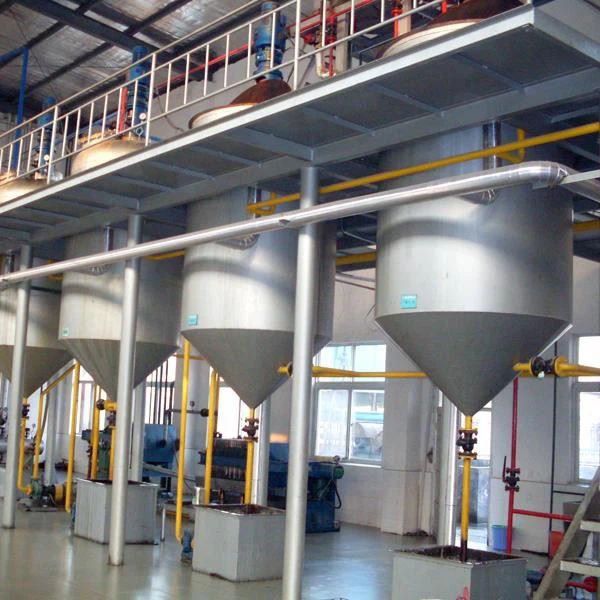
Evaporation: The filtered miscella is heated in a multi-effect vacuum evaporator to vaporize most of the solvent (oil concentration increases to 70%–80%). Vacuum conditions reduce the boiling point of the solvent, avoiding oil oxidation.
Stripping: The concentrated miscella is sent to a stripping tower, where live steam is injected to remove the last trace of solvent (solvent residue in oil <50 ppm, meeting EU/FDA standards).
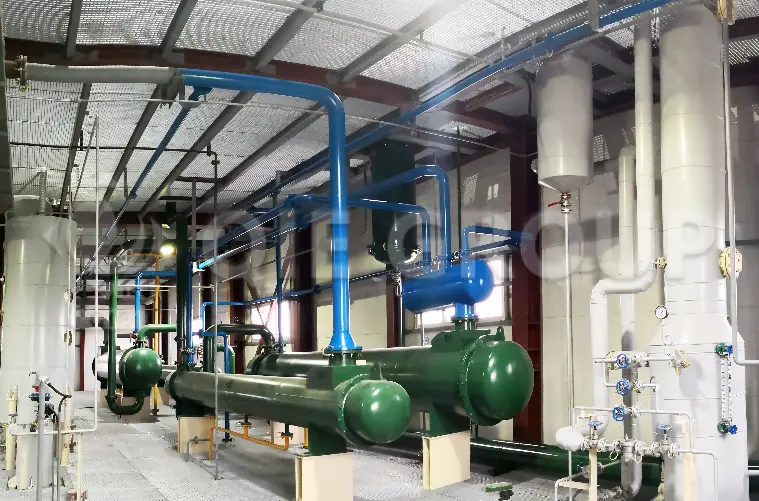
Solvent Condensation & Recycling: All solvent vapors from evaporation and stripping are cooled in a shell-and-tube condenser, liquefied, and returned to the extractor. The solvent recovery rate exceeds 99%, minimizing operational costs and environmental emissions.
Crude Oil Refining (Optional, for Edible Grade)
Crude olive pomace oil requires refining to remove impurities and improve quality for edible applications:
- Degumming: Removes phospholipids by adding hot water or phosphoric acid, followed by centrifugal separation.
- Neutralization: Neutralizes free fatty acids with alkali (e.g., sodium hydroxide) to form soapstock, which is separated by centrifugation.
- Bleaching: Adsorbs pigments and residual soap using activated clay or activated carbon under vacuum conditions.
- Deodorization: Removes off-flavors and trace contaminants by steam distillation under high temperature and vacuum.
Advantages of Solvent Extraction Technology
Low Unit Cost: Scale effect drives down production cost per ton of oil; closed-loop solvent recovery reduces raw material waste.
Continuous Operation: Fully automated production lines enable 24/7 continuous processing, suitable for large pomace supply volumes.
Flexible Raw Material Adaptability: Can process not only olive pomace but also other oil-bearing residues (e.g., palm kernel cake, soybean meal) when raw material supply fluctuates.
Frequently Asked Questions (FAQ)
What is the optimal moisture content of olive pomace for solvent extraction?
The optimal moisture content of olive pomace is 10%–15%.
If moisture is too high (>20%), it will dilute the solvent, reduce oil solubility, and increase the load of the solvent recovery system.
If moisture is too low (<8%), the pomace will agglomerate, blocking the solvent percolation channel and lowering extraction efficiency.
What are the core equipment components of a complete solvent extraction plant?
Pre-treatment system: Rotary dryer, crusher, magnetic separator, and pomace conveyor.
Extraction system: Rotary extractor (medium-scale) or loop extractor (large-scale), miscella pump, and wet meal conveyor.
Solvent recovery system: Multi-effect vacuum evaporator, stripping tower, shell-and-tube condenser, and solvent storage tank.
Wet meal desolventizing system: Desolventizer-Toaster (DTD) to recover solvent from de-oiled pomace.
Auxiliary equipment: Activated carbon adsorption tower (for solvent emission control), wastewater treatment system, and PLC control cabinet.
How to ensure solvent-free residue in the finished olive pomace oil?
Evaporation & stripping: The miscella is heated in a vacuum evaporator to separate most of the solvent, and then the residual solvent is removed by steam stripping.
Post-refining deodorization: In the deodorization tower, the oil is treated with high-temperature steam under vacuum conditions, which can reduce the solvent residue to less than 50 ppm, meeting international food safety standards (e.g., EU, FDA).
What solvent is commonly used in olive pomace oil extraction?
The most widely used solvent is food-grade n-hexane, which has the advantages of good oil solubility, low boiling point (easy to recover), and no toxic residues after standard processing. For organic production, some manufacturers use ethanol as a solvent, but the extraction efficiency is lower.