Small Scale Edible Oil Refining Machine
Small scale edible oil refining machines are compact, batch-type systems (typically 1-20 TPD) designed for entrepreneurs or small businesses to convert crude oils (soybean, sunflower, etc.) into high-quality, safe cooking oil by removing impurities like free fatty acids, pigments, and odors through key stages: degumming, neutralization, bleaching, and deodorization, offering lower investment and flexibility for various oil types.
Edible oil refining machine is the key equipment used to purify, decontaminate, decolorise and deodorise the gross oil (crude oil) obtained from pressing or leaching, so as to make it reach the national standard of edible oil. According to the different refining process, the refining equipment can be divided into batch type, semi-continuous type and full-continuous type, which are suitable for different scale of oil processing plants.
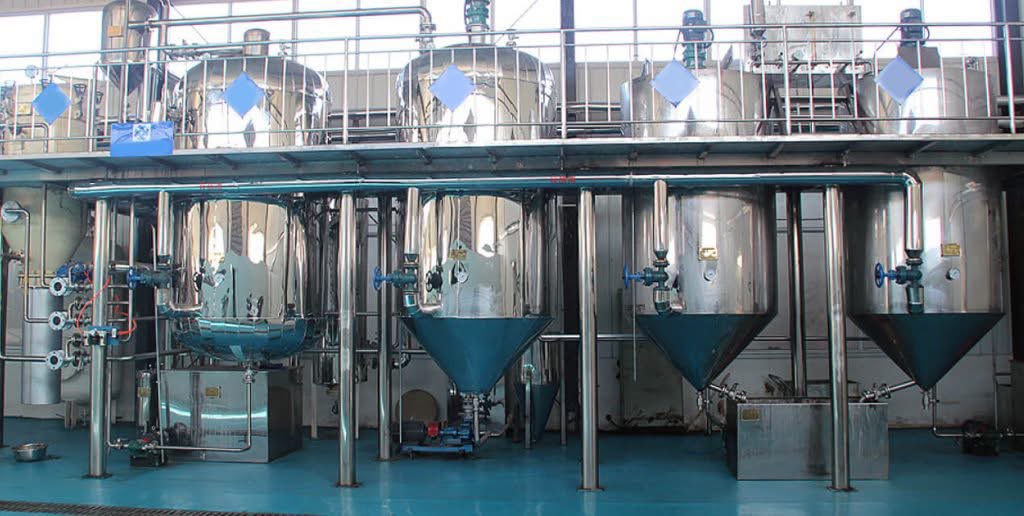
Small Scale Edible Oil Refining Machine Working Principle:
Refining equipment works by purifying crude oil to make it safe and suitable for consumption. It starts with removing impurities like phospholipids through hydration, neutralizing acids with alkali, and then removing excess water and coloring with clay. Next, the oil is deodorized to eliminate odors and heated to prevent spoilage. Finally, filtration ensures a clear and pure end product ready for cooking and other uses.
Deacidifcation and Degumming
When oil is not fully mature and processing, storage is not suitable, free fatty acids is produced Free fatty acids will increase the oil acidity thereby reducing the quality of oil. Acid value reflect:the content of free fatty acids in the oil. Alkali refining method is to neutralize free fatty acids with adding alkali. Fatty acid salts (soap) and water are generated. Soap adsorb some impurities and settle from the oil. Formed precipitate is said soap.
Degumming process is to remove colloidal substances in the oi. The removal colloida-substances are primarily phospholipids and phospholipid binding with calcium, magne-siumiron trace metals and other impurities. in short, degumming is to add amount of hot water dilute electrolyte solutions into the oil with hydration contained. The colloidal lipid-solubleswelling, cohesion, and seperate through settlement or centrifugal manner.
Dehydration and Decolorization
Dehydration needs to be carried out in a sub vacuum environment to ensure that the oil will not contact with the air during dehydration and produce oxidation reaction. The process of dehydration can be understood as heating oil in vacuum environment to separate water from oil.
Adsonption decolorization is the use of certain surface active substances with strong adsorption capacity into the oil, under certain process conditions adsorption of pigments and other impurities in the oil, after fltering the adsorbent and impurities to achieve the purpose of oil decolorization and purification process.
Deodorization
Vacuum steam deodorization method is currently the most widely used at home and abroad, the effect of a better method. It is the use of fats and oils within the odor and triglycerides of the volatility of the great difference in high temperature and high vacuum conditions, with the principle of water vapor distillation, so that fats and oils in the odor caused by volatile substances in the deodorizer and water vapor together to escape and achieve the purpose of deodorization.
Application:
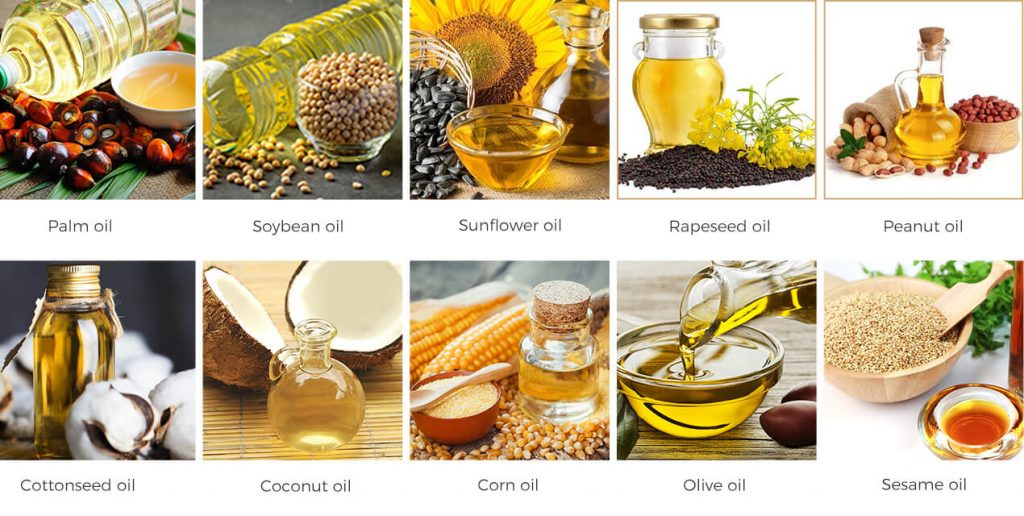
Widely used in food processing industry.Refining crude oil : soybean oil, mustard seed oil, cottonseed oil, sunflower seed oil, peanut oil, rice bran oil, safflower seed oil, corn germ oil, camellia seed oil, etc.
STEP FUNCTION DESCRIPTION OF CRUDE OIL REFINERY:
1. First step:It takes physical methods to remove insolutable impurities in the oil first time.
2.Second step: It takes absorbents to remove all kinds of pigment, colloid and oxide from oil.
3.Third step:It takes resolve something to deodorize the oil, so that the oil smells good.
4.Oil filter: It is to make purified oil reach good quality, and can meet people cooking need.
Specification
| Specification | Details |
|---|---|
| Capacity | Typically ranges from 500 kg/day to 20 TPD. |
| Material | Primarily food-grade stainless steel is used for components that contact the oil to ensure hygiene and durability. |
| Core Processes | Degumming, neutralization, bleaching (decolorization), and deodorization are standard. |
| Operation | Designed for simple and convenient operation, often with automated controls for temperature and pressure. |
| Energy Efficiency | Modern small-scale units are engineered to consume less energy compared to large industrial plants. |
Main Components of Small Scale Edible Oil Refining Machine
Small scale edible oil refining machines are designed for compact, cost-effective oil purification, and their core components are configured to complete the four key refining processes: degumming, deacidification, decolorization, and deodorization. Below are the main components, categorized by their functional roles:
1. Degumming System Components
This system removes colloidal impurities (e.g., phospholipids) from crude oil, which can cause oil turbidity and oxidation.
- Degumming Tank: The core vessel with heating and stirring functions. It heats crude oil to 60–80°C and mixes it with water or dilute phosphoric acid to make colloids coagulate and precipitate.
- Filter Press/Decanter Centrifuge: Separates the coagulated gum sludge from the oil. Small-scale models often use plate-frame filter presses for low cost and easy operation.
2. Deacidification System Components
It eliminates free fatty acids (FFAs) that affect oil flavor and shelf life, usually via chemical neutralization.
- Deacidification Tank: Equipped with a high-speed stirrer, heating jacket, and pH monitoring port. It mixes crude oil with dilute sodium hydroxide (caustic soda) solution to react with FFAs and form soapstock.
- Soapstock Separator: Uses gravity sedimentation or centrifugation to separate the heavy soapstock from the neutralized oil. Small units may integrate this function into the deacidification tank to save space.
3. Decolorization System Components
This system removes pigments (e.g., carotenoids, chlorophyll) and residual impurities to improve oil clarity and color.
- Decolorization Tank: A sealed vessel operated under vacuum (to avoid oil oxidation). It mixes deacidified oil with adsorbents like activated clay or activated carbon at 90–110°C.
- Vacuum Pump: Creates a low-pressure environment inside the decolorization tank to prevent oil degradation during heating.
- Filter Press: Separates the spent adsorbent (loaded with pigments) from the decolorized oil, producing clear, light-colored oil.
4. Deodorization System Components (Optional for Basic Small-Scale Units)
It removes volatile odorous substances (e.g., aldehydes, ketones) to enhance oil flavor. Small-scale machines often use simplified designs.
- Vacuum Deodorization Tank: Operates at high temperature (180–240°C) and high vacuum. It uses steam distillation to strip odorous compounds from the oil.
- Steam Generator: Supplies low-pressure saturated steam for the deodorization process. Some compact models integrate this component to reduce space requirements.
5. Auxiliary Components
These are essential for the stable operation of the entire refining line:
- Heating System: Includes electric heaters or steam jackets for tanks, ensuring precise temperature control during each refining step.
- Control Panel: A simple, user-friendly interface to adjust parameters like temperature, stirring speed, and processing time. Suitable for workers with minimal training.
- Water Washing Tank (Optional): Used to rinse residual soapstock from the oil after deacidification, improving oil purity.
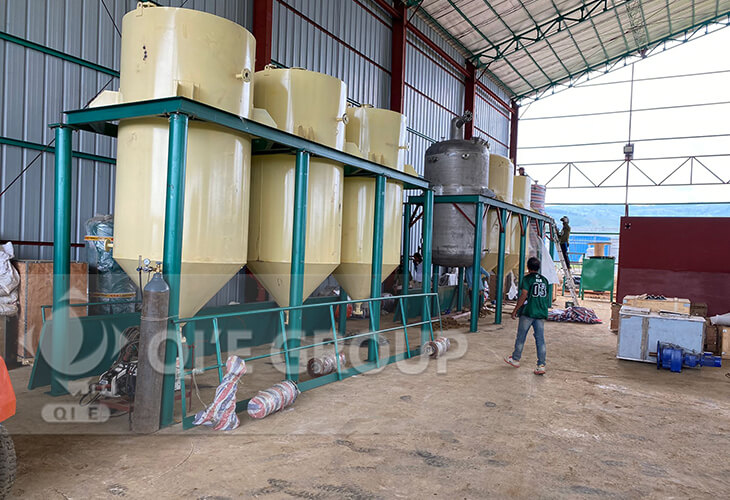
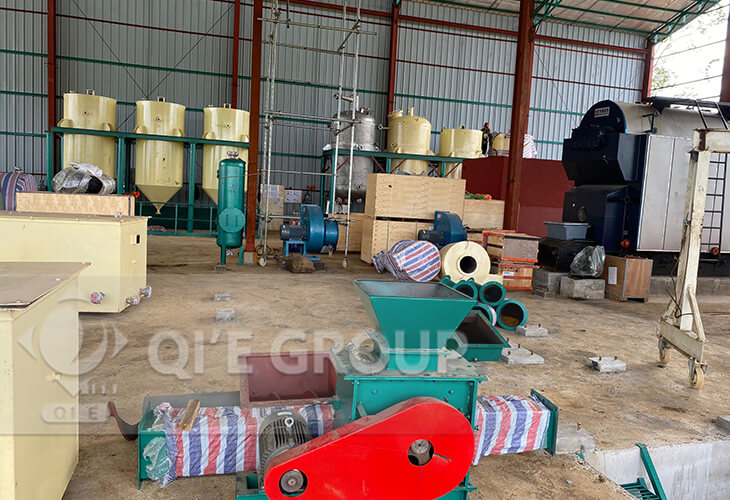
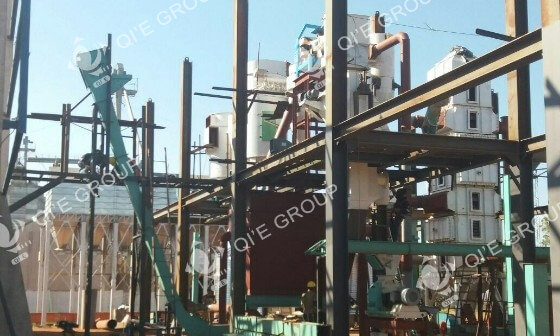
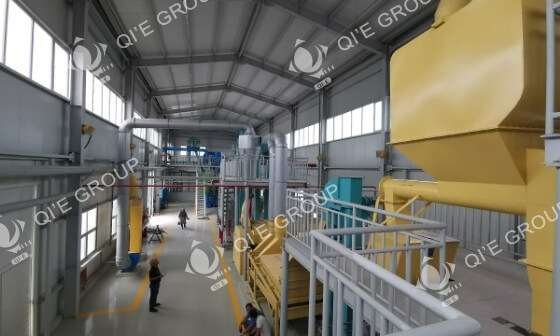
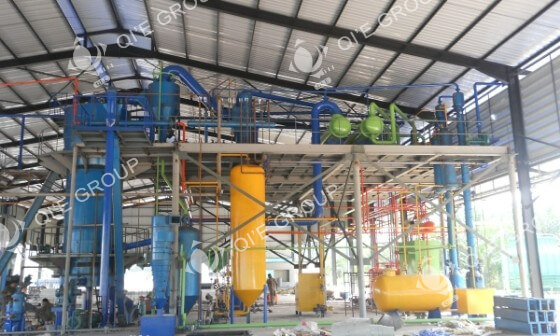
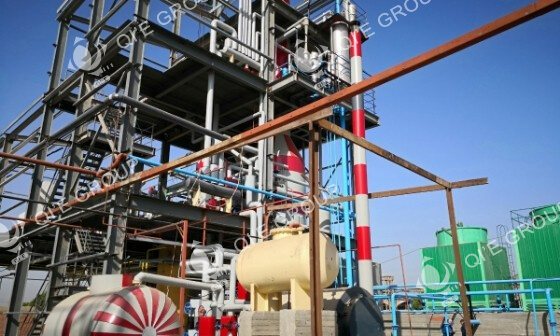
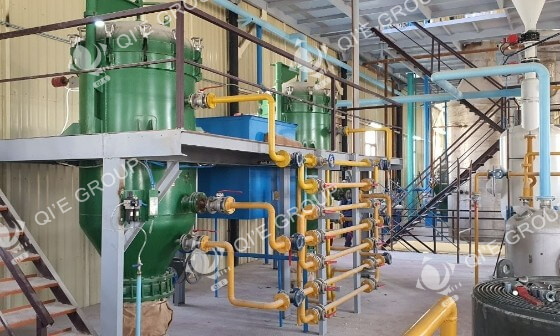
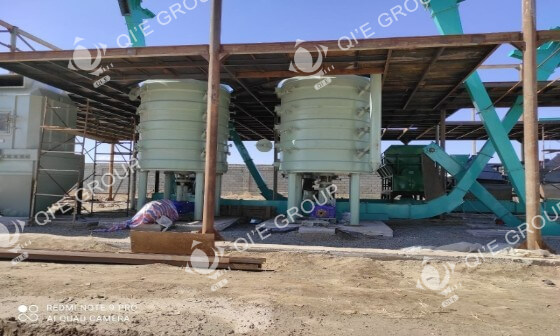
Small Scale Edible Oil Refining Machine in Africa