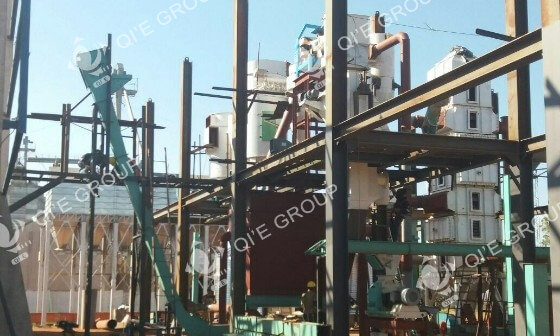
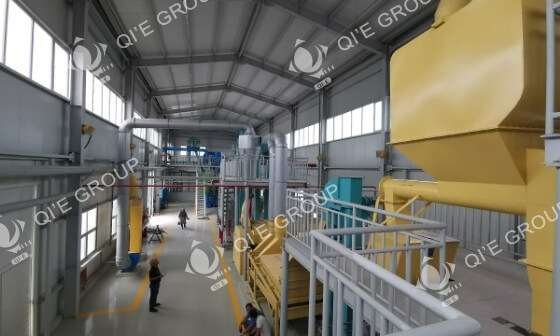
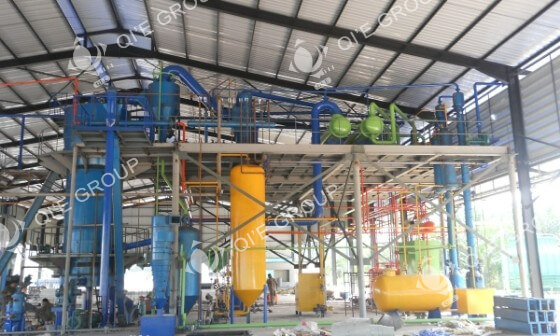
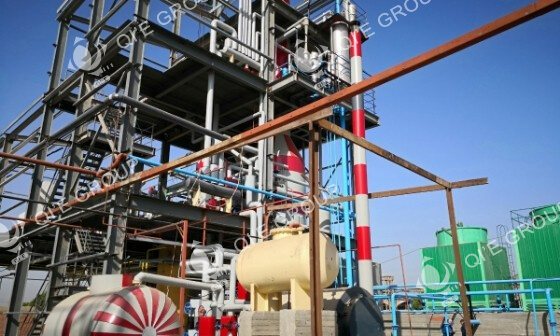
100tpd Sunflower Oil Solvent Extraction Plant
100 TPD Sunflower Oil Solvent Extraction Plant uses a chemical solvent (like hexane) to maximize oil recovery from sunflower seed cake after pressing, achieving high yields with low residual oil (<1%) by dissolving oil from the flakes in a rotocel extractor, followed by solvent recovery via evaporation (stripping tower) and refining (degumming, bleaching, deodorizing) for high-purity edible oil, often featuring PLC automation and versatility for other seeds.
With a daily processing capacity of 100 tons of sunflower seeds, it is optimized to achieve maximum oil recovery (residual oil in meal ≤1%) while ensuring solvent recycling and compliance with food safety and environmental regulations. This plant is a pivotal part of a complete sunflower oil production line, bridging the pre-pressing stage (for high-oil sunflower seeds) and the refining stage, and is widely used in commercial oil processing projects—especially in sunflower-growing regions like Nigeria, Ghana, and other African countries.
Sunflower Oil Solvent Extraction Plant Process
The 100 TPD sunflower oil solvent extraction process is an industrial method designed to maximize oil yield (achieving less than 1% residual oil in the meal) by using a solvent, typically hexane, to dissolve the oil remaining in pre-pressed sunflower cake. The process involves several key stages to separate the oil from the solvent and the meal, and to recover the solvent for reuse.
Pretreatment and Pre-pressing
Before the solvent extraction process, the raw sunflower seeds undergo several preparation steps to optimize the extraction efficiency:
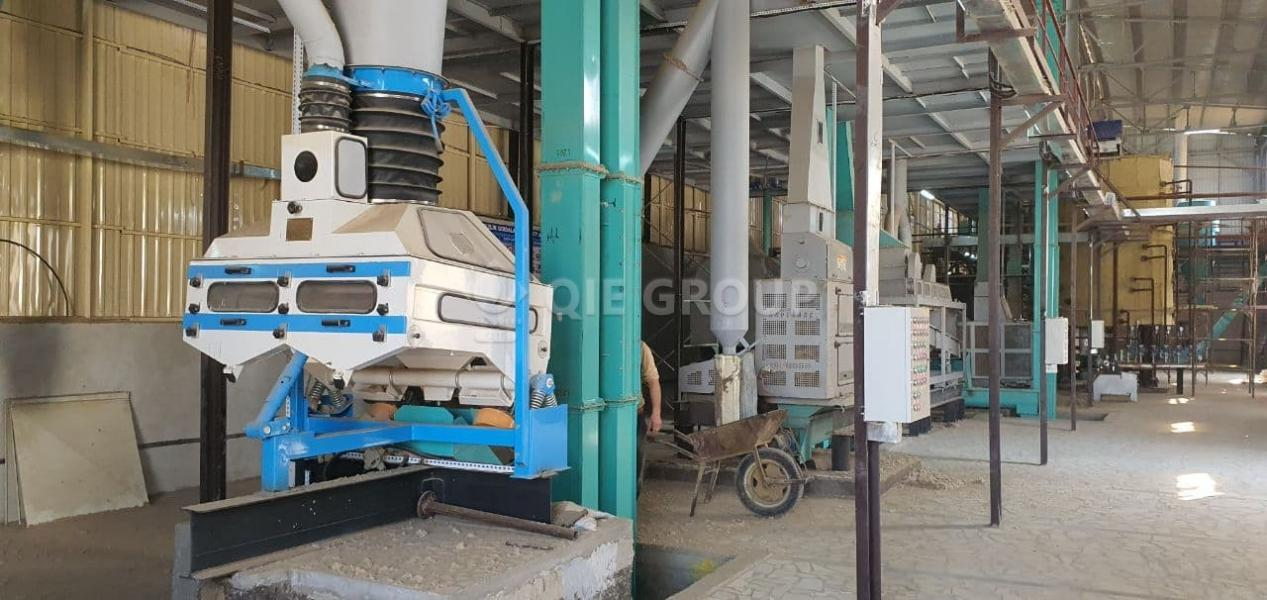
- Cleaning: Impurities like dust, stones, and metal fragments are removed using vibrating screens, destoners, and magnetic separators.
- Husking and Separation: The outer shells (hulls) are removed using a sheller to increase oil yield and improve cake quality. The kernels and shells are then separated.
- Crushing and Flaking: The kernels are crushed and then passed through a flaking mill to create thin flakes, which increases the surface area for efficient solvent penetration.
- Cooking/Conditioning: The flakes are heated with steam to adjust their moisture content and temperature, making the oil easier to extract.
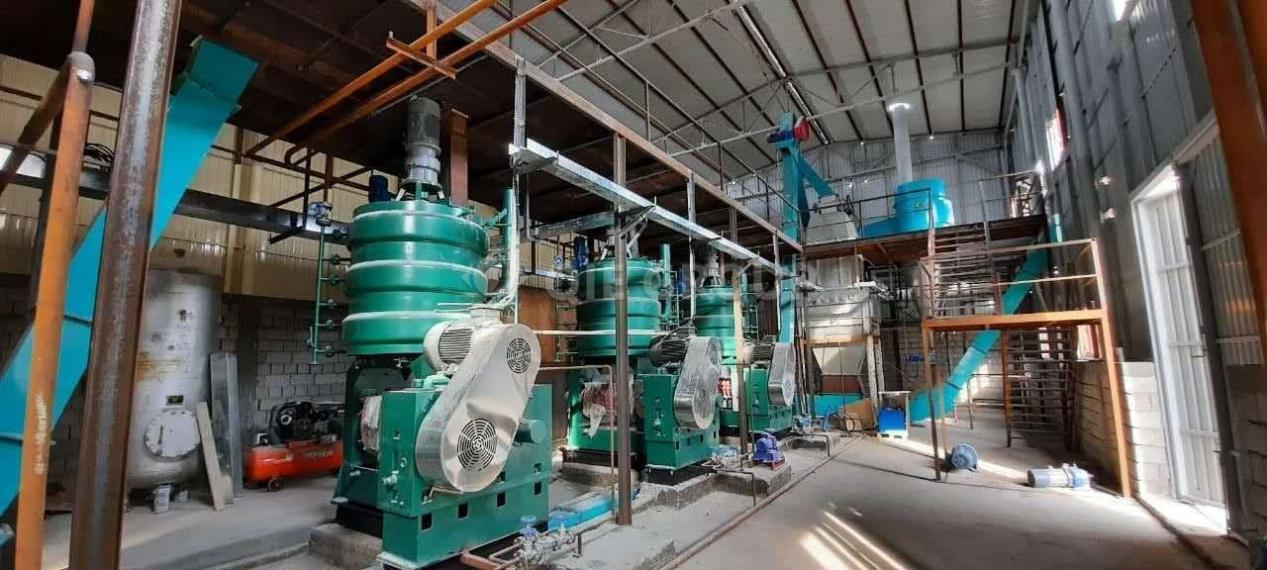
- Pre-pressing: For high oil content seeds like sunflower, most of the oil is first removed using screw presses. The resulting oil cake, which still contains 5-11% oil, is then sent for solvent extraction.
Solvent Extraction
This is the core of the process, where the residual oil is chemically extracted from the pre-pressed cake.
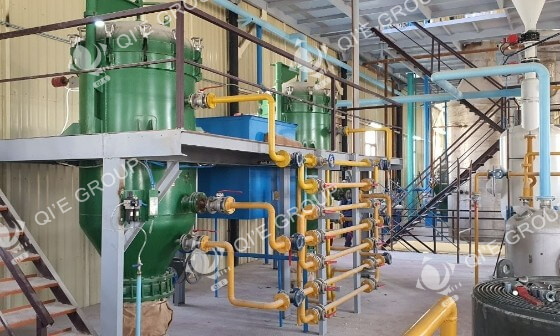
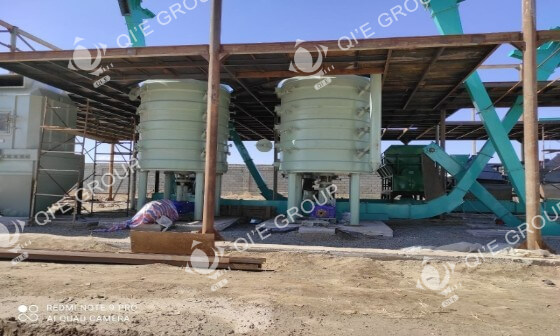
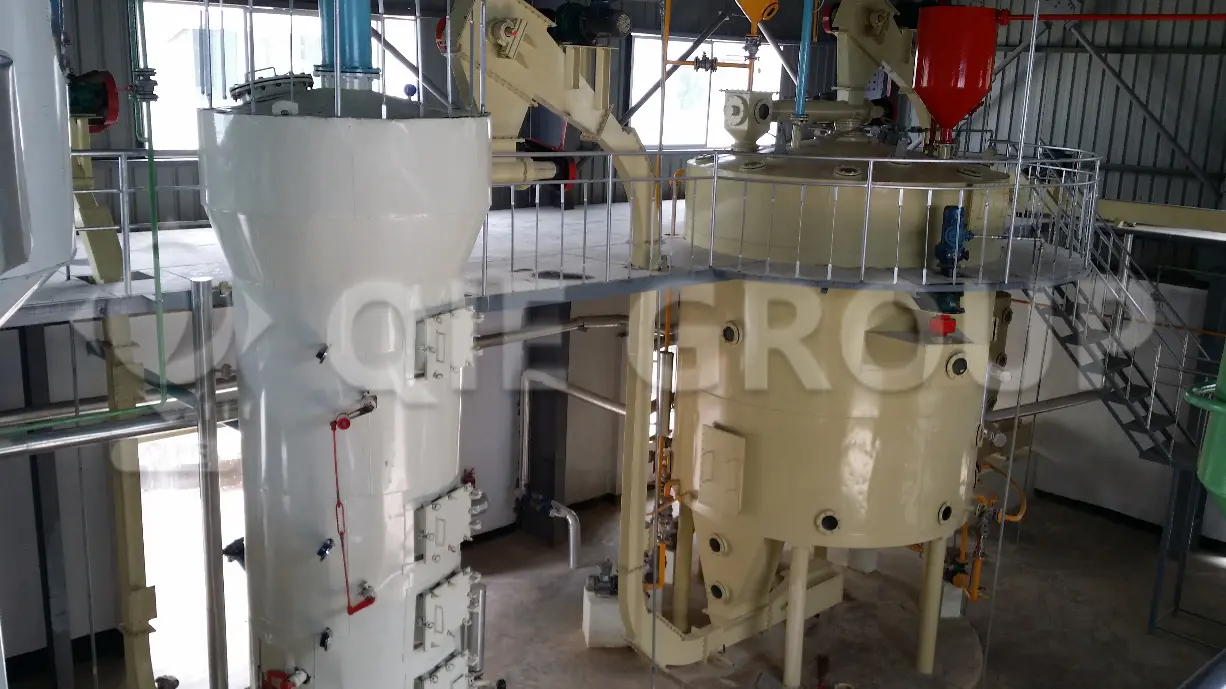
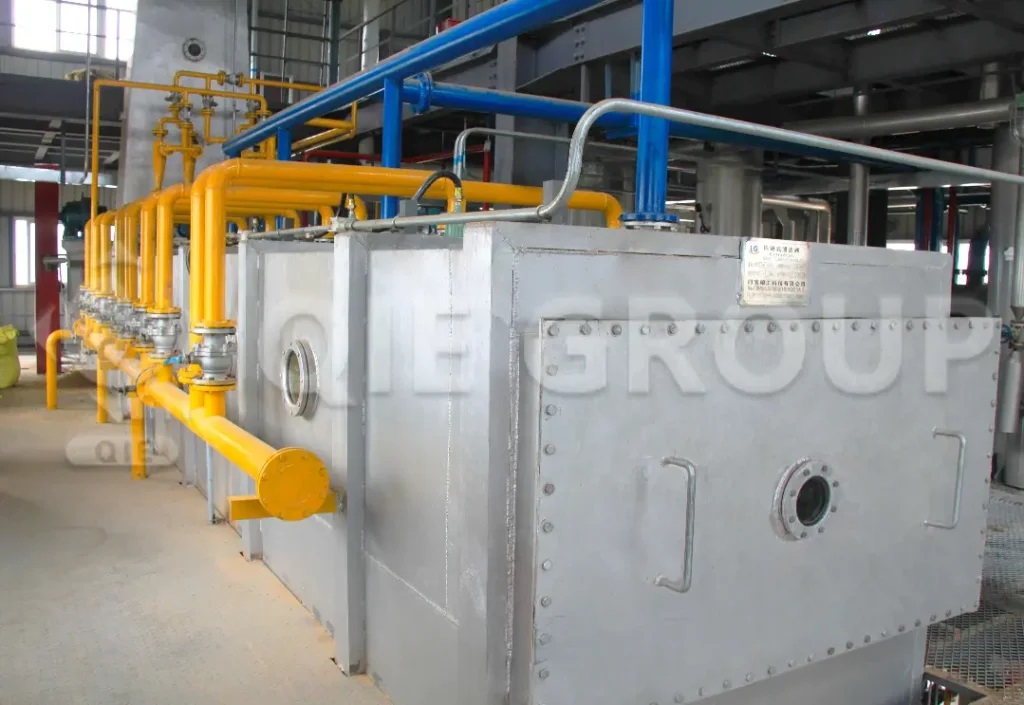
- Extraction: The pre-pressed sunflower cake is fed into an extractor (e.g., a Rotocel or loop type extractor) where it is washed and mixed with the solvent (hexane). The solvent dissolves the oil to form a mixture called "miscella," while the solid residue (wet meal) is discharged.
- Desolventizing (DTDC): The wet meal, which contains solvent, is transported to a Desolventizer Toaster Dryer Cooler (DTDC) system. Here, direct and indirect steam heating is applied to evaporate the solvent from the meal. The meal is then dried and cooled, resulting in a high-protein product (less than 1% residual oil) suitable for animal feed.
- Evaporation and Stripping: The miscella (oil and solvent mixture) is processed through multiple stages of evaporators (e.g., 1st and 2nd evaporators) and a stripping column under vacuum. Heat vaporizes the solvent, leaving the crude sunflower oil behind. Direct steam is injected in the stripping column to remove the last traces of solvent.
- Solvent Recovery: The solvent vapors generated during desolventizing, evaporation, and stripping are condensed into liquid using a cooling water system. This recovered solvent is stored and reused in the extraction process, making the operation resource-efficient.
- Wastewater Separation and Exhaust Gas Recovery: Any water separated from the recovered solvent is processed in a solvent-water separator. Additionally, a paraffin absorption system is used to recover solvent from exhaust gases, ensuring minimal environmental impact and high solvent recovery rates (over 98%).
Refining
The resulting crude sunflower oil still contains impurities (gums, free fatty acids, pigments, odors, waxes) and trace solvent residues, and must be refined to make it safe and palatable for human consumption.
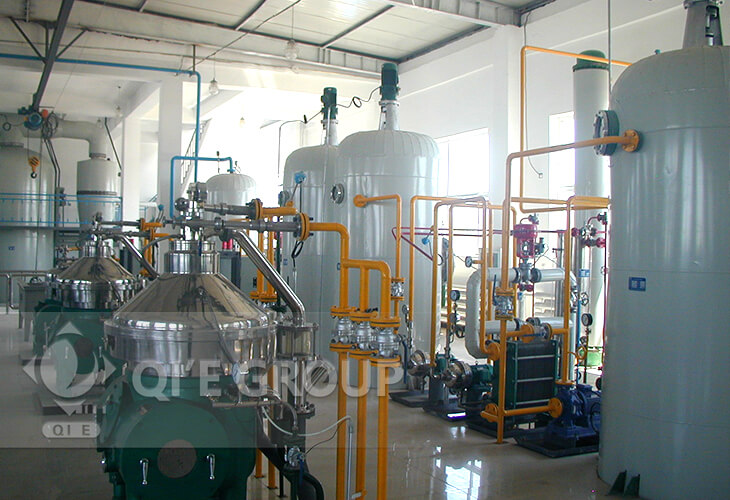
- Degumming and Deacidification: Gums and free fatty acids are removed using hydration with phosphoric acid and neutralization with an alkali like sodium hydroxide.
- Decolorization (Bleaching): Adsorbents, such as activated carbon, are used to remove unwanted pigments.
- Dewaxing (Winterization): A critical step for sunflower oil due to its high wax content. The oil is cooled to precipitate the waxes, which are then filtered out to prevent the oil from solidifying at cold temperatures.
- Deodorization: Unacceptable odors and remaining volatile compounds are removed through steam distillation under high vacuum and high temperature.
Technical Specifications
| Parameter | Standard Value |
|---|---|
| Daily Processing Capacity | 100 tons of pre-pressed sunflower flakes |
| Residual Oil in Defatted Meal | ≤1% |
| Solvent Recycling Rate | ≥95% |
| Crude Oil Yield | ~18–20% of input flakes (varies with raw material quality) |
| Power Consumption | ~80–100 kWh per ton of processed flakes |
| Steam Consumption | ~300–350 kg per ton of processed flakes |
| Labor Requirement | 8–12 operators per shift (depends on automation level) |
Compare different types of extractors used in sunflower oil solvent extraction
In a 100 TPD sunflower oil facility, selecting an extractor depends on production scale, material type, and space. TheRotocel extractor is the industry standard for this capacity.
| Type | Suitable Capacity | Best For | Key Features & Advantages |
|---|---|---|---|
| Rotocel Extractor | 30 – 300 TPD | Pre-pressed cakes (sunflower, peanut) | Compact & Reliable: Features a horizontal rotary design with multiple cells that rotate around a central axis. Low power consumption, minimal noise, and reduced maintenance. |
| Loop Type Extractor | 500+ TPD | Large-scale continuous plants | High Efficiency: Materials turn over twice during extraction for uniform soaking. Uses a chain drive and shallow material layers to promote fast solvent drainage. |
| Drag Chain Extractor | Large industrial scale | High-permeability seeds (soybean) | Low Height: Features a box structure that is lower in height than loop extractors. Ideal for large-scale modular installation and fast commissioning. |
| Batch Tank Extractor | Below 20 TPD | Very small-scale operations | Simple Operation: Works in batches; multiple tanks can be linked to simulate a continuous process. |
Edible Oil Solvent Extraction Plant
An Edible Oil Solvent Extraction Plant efficiently extracts oil from seeds (like soybeans, rapeseed, sunflower) using a solvent (usually hexane) to dissolve oil from flakes, maximizing yield, especially for low-oil materials, by separating oil from solids, recovering solvent via desolventizing and evaporation, and producing high-protein meal and crude oil for refining, with safety & environmental controls crucial.
Process
Oil Extraction Section → DTDC Desolventizer Toaster Dryer Cooler → Oil Filtration Section → Evaporation and Separation Section → Solvent Condensation and Recovery System → Paraffin Absorption System → Water Solvent Separation and Recovery System → Automatic Control System
Oil Extraction Section
Customers can choose rotocel extractor or drag chain extractor based on their requirements. For different raw materials, grid trays clearance and grid trays arrangement will be properly adjusted to ensure that the oil residues in seed meal is minimum. In addition, liquids in seed meal will be completely drained off, which contributes to minimum solvent content. As a result, the burden imposed on desolventizing device in sequential process will be greatly alleviated, which further reduces steam consumption.
DTDC Desolventizer Toaster Dryer Cooler
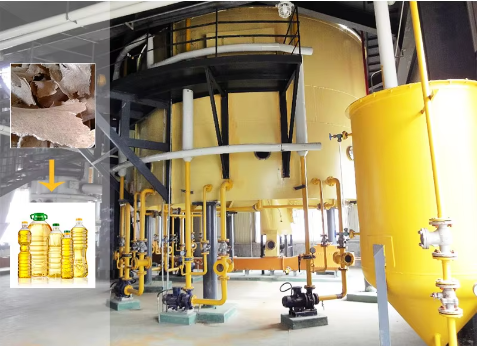
The machine consists of pre-desolventizing layer, heat exchange layer, desolventizing layer, heat recovery layer, drying layer and cooling layer. Materials levels at each layer can be automatically controlled. Full utilization of secondary steam reduces steam consumption. Mixed steam will be used to heat miscella after meal foam removal, which further saves energy. The process features thorough desolventizing, light yellow meal, complete passivation of antinutritional factors, short time required for high temperature desolventizing and low loss of meal NSI.
Oil Filtration Section
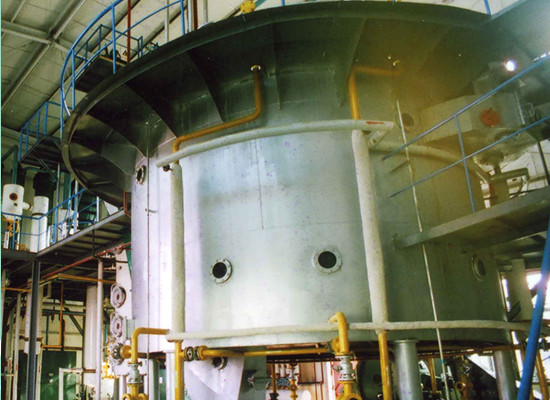
The process is designed to filter out solid impurities prior to miscella evaporation. Devices used include high pressure delivery pump, centrifugal separator and filter with slagging function. Optimum filtration effect can be achieved by combination of centrifugal separation precise filtration. Since the filter is able to remove slags automatically, no manual operation is required.
Evaporation and Separation Section
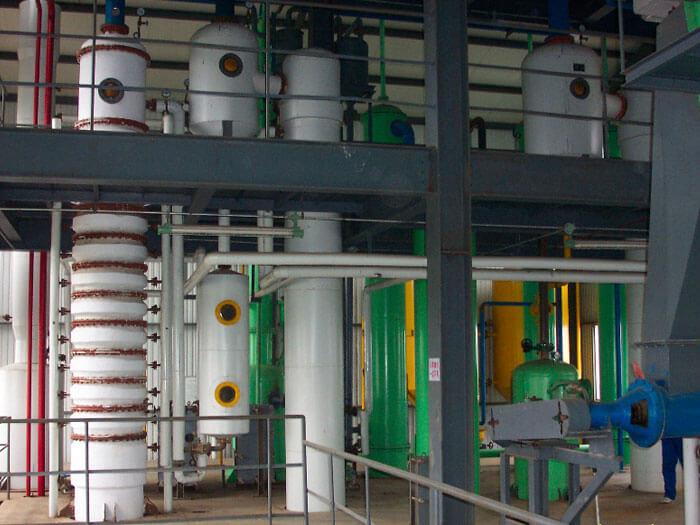
Devices used in the process contains evaporator, disc stripping tower, flash separator, heat exchanger and vacuum unit. Under a vacuum and negative pressure condition, solvent in the miscella will be evaporated and separated by rising film evaporation and direct stripping. After thorough desolvation, bright color leached oil will be obtained. To ensure system stability and reliability, an automatic PLC control system is adopted for control of evaporating temperature and vacuum level. Both mixed steam and power steam for vacuum pump will be sufficiently used for evaporation. Heat transfer and mass transfer between cool and hot medium furthers reduces steam consumption. In addition, lipid oxidation can be prevented as well.
Solvent Condensation and Recovery System
The system mainly consists of condenser and circulating cool water system. Under the vacuum condition, condensable solvent steam is condensed into liquids for cyclic utilization through dividing-wall heat transfer. Multiple-pass structure of the condenser and proper settings of flow rate and speed of circulating water will greatly improve efficiency of condensation and separation and largely reduces investment capital and operating cost. In addition, tube plates, baffle plates and heat exchange tubes are all made of stainless steel, which facilities cleaning and withstands corrosion. Moreover, great condensation effect and long service life can be fully ensured.
Paraffin Absorption System
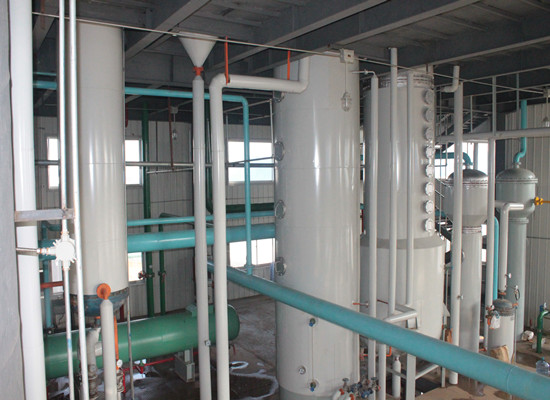
The system consists of Paraffin absorption column,Paraffin desorption column,hear exchanger,storage tank, punp,Exhaust gas blower and so on. It is able to recycle more than 98 percent solvent in the exhaust gas, which reduces solvent loss and protects environment at the same time.
The system makes use of food-grade liquid paraffin to adsorb solvent gas mixed in exhaust gas. The solvent steam will be distilled and separated with the help of superheated steam. Then the solvent steam obtained will be recycled through condensation. To ensure stable absorption efficiency and system reliability, automatic control devices are applied to control important parameters such as flow rate, temperature and pressure.
Water & Solvent Separation Section
The system consists of solvent-water separator, boiling tank,and fresh solvent pump. It separates water from solvent based on the principle that water repels solvent and two liquid layers will be formed in their mixture. To ensure stability and reliability of the system, automatic control devices are applied to control important parameters such as flow rate, temperature and material level.
Automatic Control System
In our production lines, we make use of Siemens PLC control system, which is one of mainstream automatic control systems in today`s industry. The efficient, stable and advanced DCS control system consists of operation station, control station and communication network. We utilize high-speed and large-capacity S7-400 series PLC at the control system, large-screen LCD at the operation station, WINCC 7.0 industrial control software as monitoring software and PROFIBUS filed bus network for communication.